
Water well sanding: What it is, when it is done and how much it costs
Sanding is the operation that restores life to a clogged well. Find out when it is necessary, how it is done and why it should not be postponed.
Team ForajePuțuri.ro
Author
What is sanding?
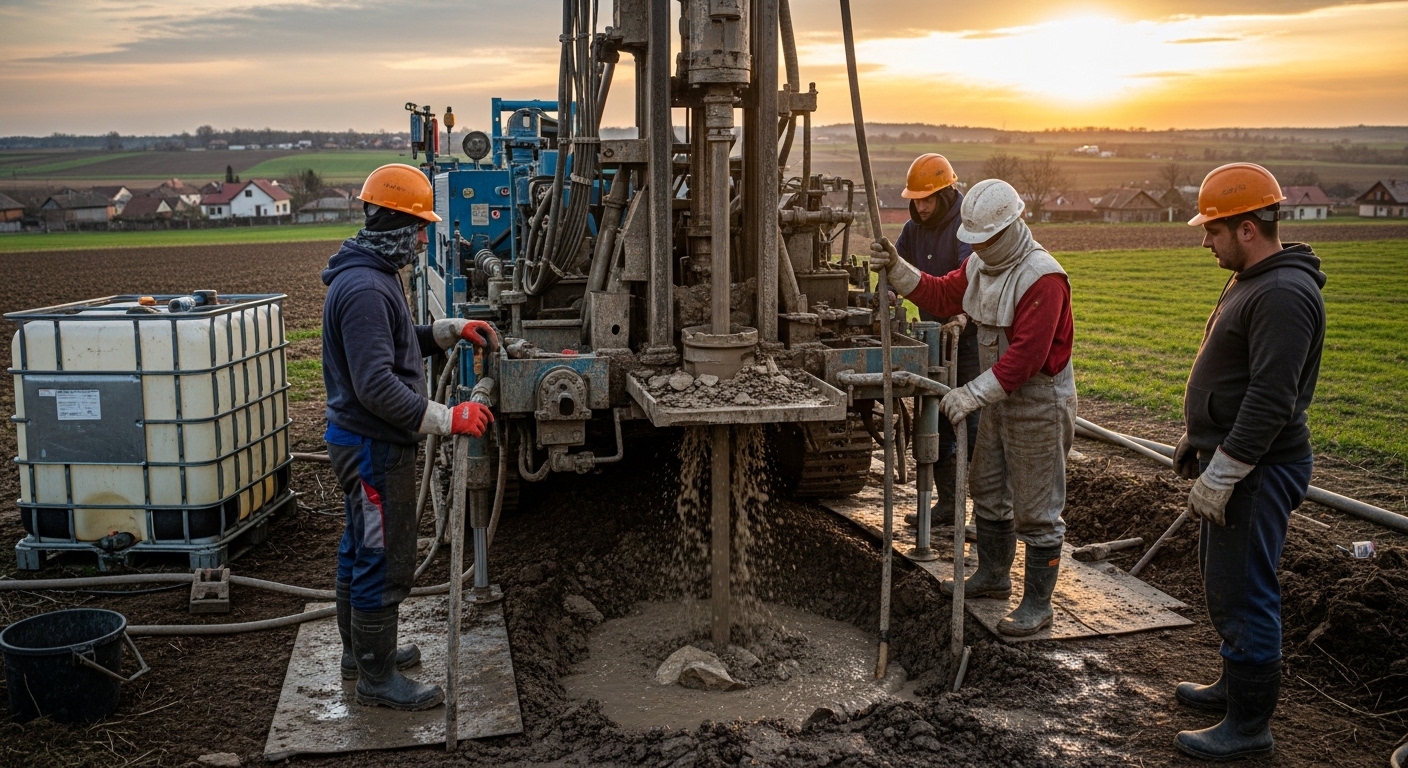
Denisipari is the process of cleaning the borehole by extracting the sand, silt and fine particles accumulated in the decanter and on the filters, restoring the water flow and quality. It is the equivalent of a complete "service" for your water well.

Why is a well sandblasted?
Any drilled well accumulates fine particles from the aquifer over time. The process is natural, but accelerated by:
- Filters with slots too large for the aquifer grain size
- Excessive pumping (flow greater than sustainable)
- Damage to filters or tubing
- Changes in the geological structure around the well
- Lack of filter material (quartz gravel) around the filters
Signs that your well needs sanding
- âš ï¸ Water comes with sand or increased turbidity — the clearest sign
- âš ï¸ The flow decreased significantly compared to the initial one
- âš ï¸ The pump frequently jams or emits abnormal noises
- âš ï¸ Pressure fluctuates without apparent cause
- âš ï¸ The pump runs continuously without satisfying the demand
- âš ï¸ Premature pump wear due to abrasive sand
Read more about the warning signs in our water well maintenance guide.
Types of denisiparation
1. Initial sanding (after drilling)
Mandatory after any new drilling. It is carried out immediately after the work is completed and takes 4–24 hours. Cleans drilling debris and stabilizes the aquifer around the filters. It must be included in the contract with the well drilling company.
2. Periodic sanding (maintenance)
Recommended every 3–5 years for wells in normal operation. Prevents advanced clogging and extends pump life.
3. Emergency sanding (fix)
Needed when the flow has decreased dramatically or the water is permanently cloudy. More expensive and more laborious than the periodic one.
How is sanding done
- Extraction of the submersible pump and electric cable
- Visual inspection of the well (deep well video camera)
- Cleaning pumping with special de-sanding pumps or compressors
- Extraction of sediments accumulated in the decanter (0.5–3 m³ of sand)
- Mechanical cleaning of filters by brushing or pressurized water jet
- Clarification pump until the water becomes clear
- Reinstalling the pump and checking the parameters
- Final disinfection with chlorine solution
How long does a denisification last?
| Well type | Estimated duration |
|---|---|
| Well 20–50 m, light clogging | 4–8 hours (1 day) |
| Well 50–100 m, medium clogging | 1–2 days |
| Well 100–200 m, advanced plugging | 2–5 days |
| Industrial drilling, severe clogging | 5–10 days |
How much does sand removal cost in 2025?
| Service | Indicative price |
|---|---|
| Denisipare domestic well (30–80 m) | 1,200–2,500 lei |
| Denisipare deep well (80–150 m) | 2,500–5,000 lei |
| Denisipare industrial drilling | 5,000–15,000 lei |
| Video camera inspection | 400–800 lei |
| Post-disinfection | 300–600 lei |
The cost increases significantly if sanding has been delayed for a long time. Prevention is always cheaper than cure.
Can denisification be avoided?
Partly. Through properly executed drilling — with properly sized filters, quality filter material and properly sized pump — the interval between deburring can be extended to 5–10 years. Learn how technical mistakes in drilling accelerate clogging.
Don't delay de-sanding — the longer the sand sits, the greater the damage to the pump and filters.
→ Request Professional Denisipari - Free Quote
Conclusion
Regular dredging is the most important maintenance operation for a drilled well. Done on time, it protects your pump, filters and overall investment. Don't put it off until it becomes an expensive emergency!