
Deep Drilling: When Needed and What to Expect
Deep wells (80–500 m) are the solution for deep aquifers, high flows or areas with poor surface water. Complete technical guide.
Team ForajePuțuri.ro
Author
What does a deep drilling mean?
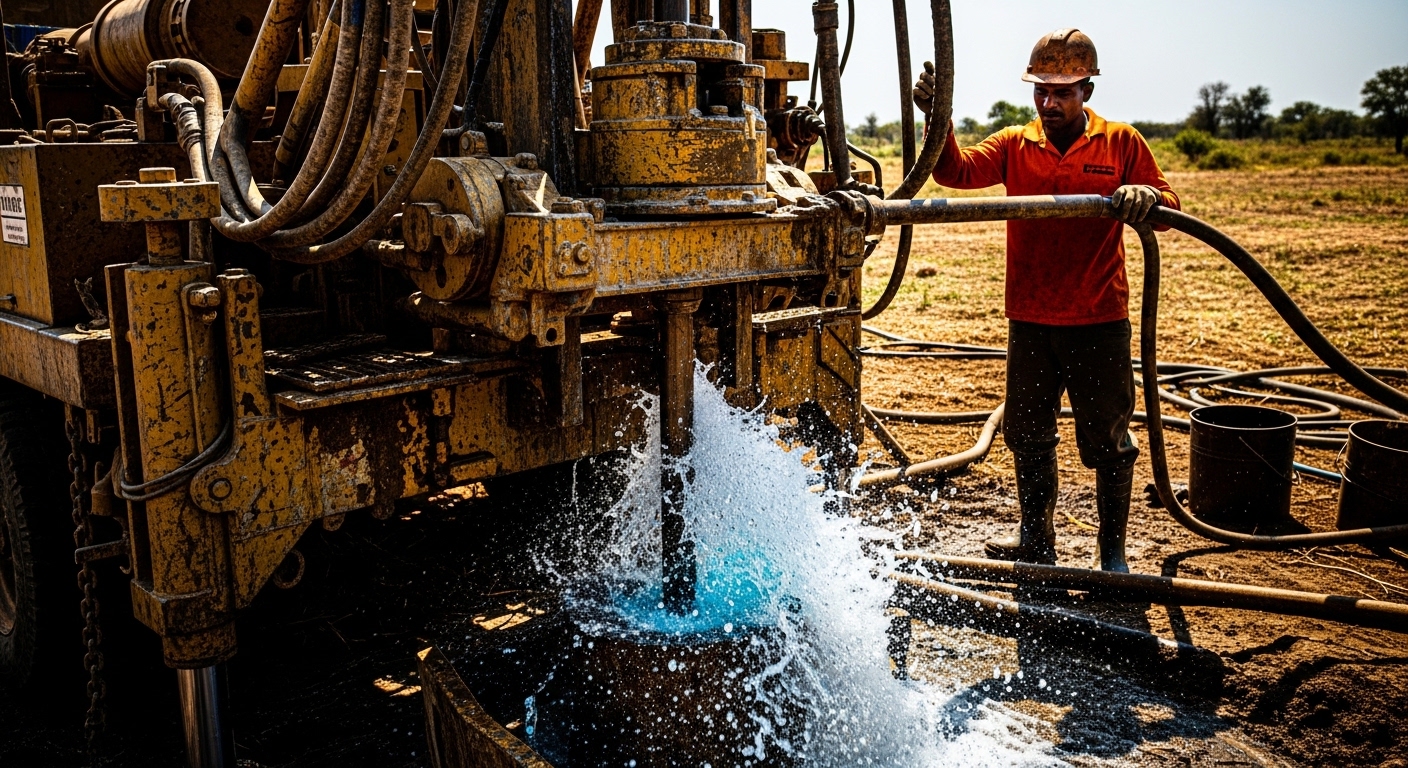
By convention, a deep well exceeds 80 meters and accesses deep, captive or semi-captive aquifers, isolated from surface activities by impermeable layers of clay or rock.
Why do you need a deep well?
- Surface aquifers are absent or insufficient — in some areas (eg plains, calcareous areas) water is only found at great depths.
- Poor surface water quality — elevated nitrates, iron, manganese or bacteria require access to deeper, purer layers.
- High flow required — industrial use, extensive irrigation or heat pump systems require volumes of water that shallow aquifers cannot supply.
- Stability over time — deep aquifers are less affected by seasonal variations or drought.
Frequent depths by geographical areas in Romania
| Region | Typical depth | Features |
|---|---|---|
| Romanian Plain | 80–200 m | Sand layers interspersed with clay |
| Moldova (center) | 60–150 m | Aquifers in Sarmatian deposits |
| Transylvania | 50–120 m | High variability, rocky areas |
| Oltenia | 100–250 m | Deep water tables, good flow |
| Dobrogea | 150–400 m | Limestone, difficult and expensive drilling |
| Subcarpathians | 40–100 m | Multiple sails, coring recommended |
The technical process of a deep drilling
1. Preliminary hydrogeological study
Essential for drilling above 100m. Includes geological map analysis, survey of existing boreholes in the area and, in some cases, geophysical surveys (refraction seismic, electrical resistivity).
2. Necessary equipment
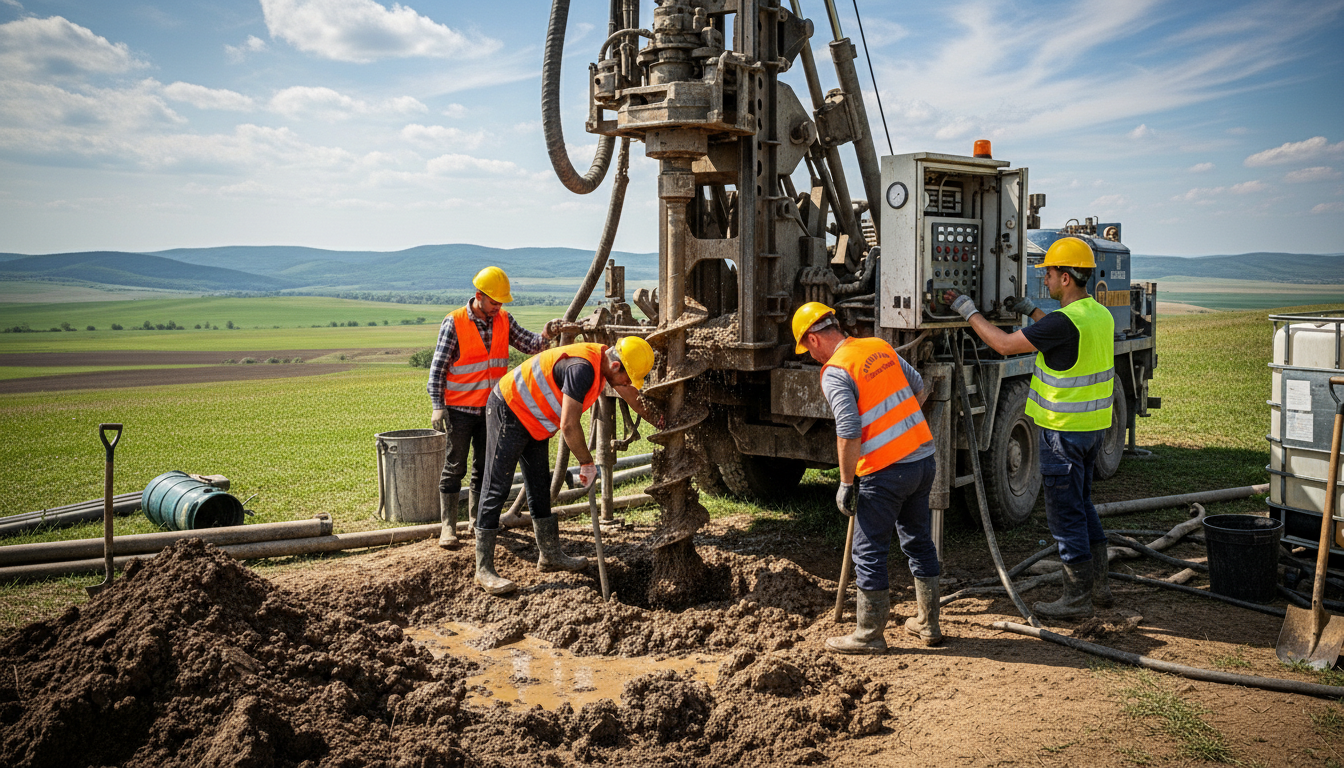
Deep drilling requires more powerful machines than standard ones. Read more about modern drilling equipment and what to ask from the hired company.
- Rotary installations with reverse flow (reverse circulation) for depths 150–500 m
- Downhole hammer (DTH) for hard rock
- Mandatory electric coring for filter positioning
3. Piping for great depths
- Guide column: Ø 400–600 mm, on the first 5–15 m, prevents superficial shocks
- Exploitation column: Ø 125–200 mm, rigid PVC SN8 or stainless steel
- Johnson filters: Stainless steel with 0.5–2 mm slots, pressure resistant
- Filter material: Graded quartz gravel, around the filters
4. Sanding and sample pumping
At great depths, denisipari is a longer process (2–5 days) and essential for the stabilization of the borehole. Test pumping establishes the well's sustainable flow rate.
Indicative costs — deep drilling 2025
| Depth | Price/ml | Estimated total (Ø 140 mm) |
|---|---|---|
| 80–120 m | 280–350 lei | 22,400–42,000 lei |
| 120–200 m | 320–420 lei | 38,400–84,000 lei |
| 200–300 m | 380–500 lei | 76,000–150,000 lei |
| 300–500 m | 450–650 lei | 135,000–325,000 lei |
Note: Prices vary depending on rock type, equipment required and travel distance. For a fair budget, see also the complete drilling prices 2025 guide.
Permits required for deep drilling
Boreholes over 50 m or with a flow rate over 10 mc/day require approval from ANAR. Read the complete guide on wells legislation in Romania to know exactly what documents are required.
Main Applications of Deep Drilling
- â™¨ï¸ Geothermal heat pumps — wells require 80–200 m per circuit; details at heat pumps
- ðŸ Industrial and agricultural use — water reserves for production; details at industrial drillings
- ðŸ Domestic consumption in areas without a shallow aquifer — including potable water of certified quality
Our team evaluates the feasibility for free and gives you an accurate estimate for your specific situation.
→ Request Free Assessment for Deep Drilling
Conclusion
Deep boreholes are the right solution where surface water is insufficient or of poor quality. With proper planning, proper equipment and an experienced company — chosen according to the criteria in our guide to selecting a drilling company — you will have a reliable water supply for decades.