
Geothermal Heat Pumps: Complete Guide to Installation and Benefits
Ground-water geothermal systems are the most efficient method of heating and cooling. Find out how it works, what drilling it requires and what the real savings are.
Team ForajePuțuri.ro
Author
What is a geothermal soil-water system?
A geothermal system uses heat pumps coupled to vertical wells drilled into the ground to extract thermal energy stored in the soil. At depths of 50–200 m, the earth's temperature remains constant at 10–14°C all year round — an inexhaustible and free source of energy.
How it works in detail
- Geothermal wells (boreholes) — U-shaped tubes lowered into the ground through which a thermal agent circulates (water + antifreeze)
- Thermal agent absorbs heat from the ground and transports it to the pump
- The heat pump compresses the agent and raises the temperature to 35–55°C (for underfloor heating) or 55–65°C (for radiators)
- Heat is distributed in the house through radiant floors, fan coils or radiators
- In summer, the process is reversed: you cool the house and "deposit" the heat back into the soil
How many boreholes and how deep do you need?
| House area | Power required | Total probe length | Typical configuration |
|---|---|---|---|
| 80–100 sq m | 6–8 kW | 120–160 m | 1–2 probes × 100 m |
| 100–150 sq m | 8–12 kW | 160–240 m | 2 probes × 100–120 m |
| 150–200 sq m | 12–16 kW | 240–320 m | 2–3 wells × 100–120 m |
| 200–300 sq m | 16–24 kW | 320–480 m | 3–4 probes × 100–120 m |
| 300+ sq m | 24+ kW | 480+ m | 5+ wells or deeper wells |
General rule: 15–20 m of probe per required thermal kW. Home insulation has a major impact on power requirements — a well-insulated home can reduce probes by 30%.
Types of boreholes for heat pumps
Vertical wells (BHE — Borehole Heat Exchangers)
The most widespread solution in Romania. Requires little land, but involves deep drilling (100–200 m). Drilling diameter: 130–160 mm.
Horizontal collectors
Tubes 1.5–2 m deep on large areas of land (200–400 sq m per kW). Inexpensive, but require available land and are influenced by seasonal variations.
Wells in underground water (water-water)
The pump draws water from one well and returns it to another. Requires an extraction well and an injection well 15+ m away.
Installation process — steps
- Energy audit of the house — calculation of the thermal power requirement
- Preliminary geological study — soil thermal conductivity (optional TRT test)
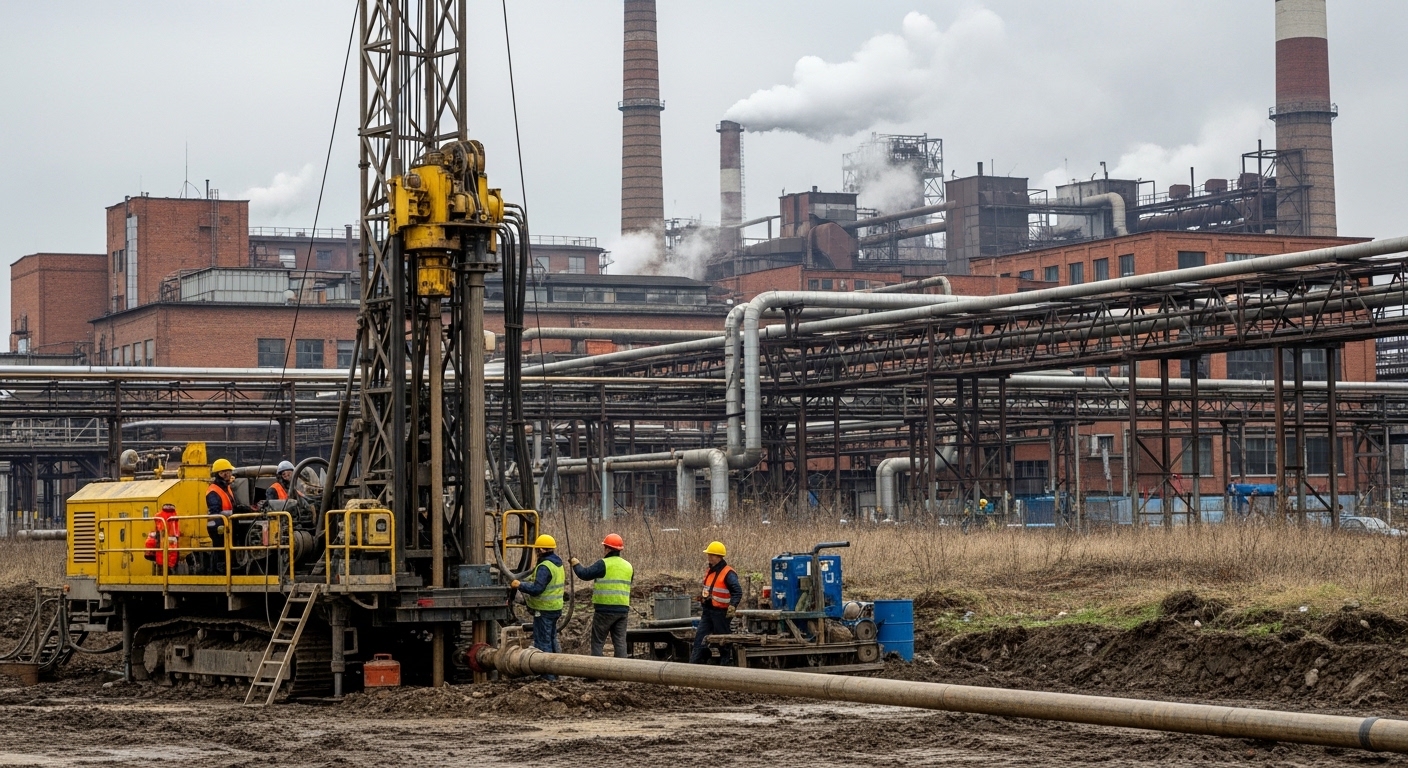
- Well drilling — 1–3 days per well, depending on depth and rock type
- Installation of U-tubes and injection of thermal grout (bentonite cement)
- Installation of the heat pump and internal circuits
- Filling the circuits with thermal agent (propylene glycol 25–30%)
- Starting and tuning the system
Full geothermal system costs 2025
| Component | Estimated cost |
|---|---|
| Well drilling (100 m × 2) | 20,000–35,000 lei |
| Heat pump (8–12 kW) | 15,000–30,000 lei |
| Collector, heating agent, connections | 3,000–6,000 lei |
| Radiant floor (if not available) | 8,000–20,000 lei |
| Installation labor | 3,000–8,000 lei |
| Total house 120 sqm | 45,000–100,000 lei |
COP and efficiency — what it means in practice
COP (Coefficient of Performance) = thermal energy produced / electrical energy consumed.
- COP 4 = 1 kWh electricity → 4 kWh heat
- Modern geothermal pumps have a COP of 4.5–5.5 (compared to 2.5–4 for air-to-water pumps)
- Over the full season (SCOP), the actual efficiency is 3.5–4.5
Grants and funding programs
- AFM — Energy Efficient House: Up to 15,000 lei for heat pumps + drilling
- European PNRR funds: Funding for energy renovation with efficient HVAC systems
- Green bank loans: Preferential interest rates for investments in renewable energy
More details about savings and benefits in the article foraje heat pumps — smart investment.
We calculate the need for wells for your home for free and offer you a complete project with real costs.
→ Geothermal heat pumps — free project
Conclusion
A geothermal system is the best long-term investment for heating and cooling. With professionally executed drilling — check the criteria in the choosing the drilling company — and a quality heat pump, you will reduce your energy bill by 50-70% over the lifetime of the system.